
A Conversation with Architect Jeff Gears
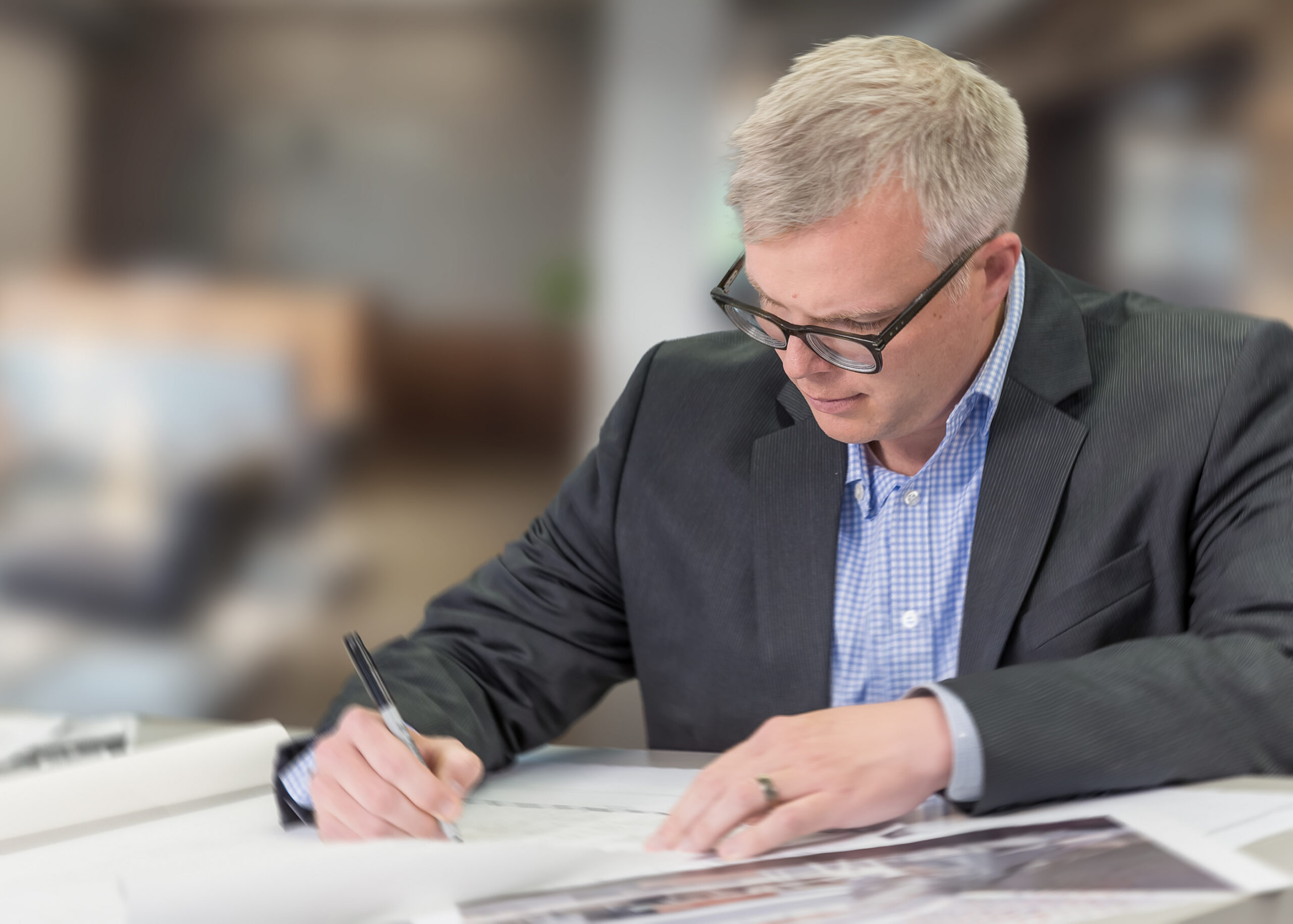
I first met Jeff Gears several years ago during the mid-planning and design stages of the Meander Park & Boardwalk development, located on the north side of Highway 55 in Medina. At the time, Jeff was working with Fusion AE (formerly SRa Architecture), the architectural firm our development team selected to continue bringing the vision for Meander Park to life.
Over the years, Jeff played an important role in shaping the design of several key elements of the project, including the restaurant, mixed-use retail and office building, and event venue. Today, Jeff serves as Director of Pre-Design for Bauer Design Build, in Plymouth, MN where he continues helping clients like us navigate the complex journey from concept to construction.
What has always stood out to me about Jeff is his ability to blend creativity with practicality. Whether discussing site constraints, budgets, design opportunities, or long-term vision, he consistently approaches challenges with a collaborative mindset and a focus on finding solutions.
As a St. Louis Park resident with deep roots in Minnesota’s design and development community, Jeff has spent more than two decades helping shape the places where people work, gather, and do business. I recently reached out to him to discuss his career, the evolution of architecture in Minnesota, and the lessons he’s learned along the way.
1. What first sparked your interest in architecture, and when did you realize it was something you wanted to pursue as a career?
There were a few things that led me on this career path. When I was a kid, I always loved art and playing with Legos – I especially enjoyed building new things that were unique and different than what was shown on the box or in the instructions – I’d often get frustrated trying to find blocks all in the same color so that whatever I was building looked cohesive.
But I think maybe the biggest influence from my childhood was visiting my uncle (dad’s brother) in Chicago a few times each year – I always got excited to see the skyscrapers.
I grew up in St Louis Park, so don’t get me wrong, MPLS is an awesome city… but that Chicago skyline always captivated me. The idea that these massive structures were designed and built by humans blew my mind.
I remember in High School we had an assignment to research a potential career, and when I thought about the idea of being an Architect it just felt right, it felt like who I was… and from that moment on I’ve never looked back.
2. Looking back over your career, what were some of the key stops along the way—from your early years through firms like BDH, Fusion AE , and now Bauer Design Build—and what did each chapter teach you?
I’ve been fortunate throughout my career to have worked with some wonderful people at some great firms, and I’ve also had the opportunity to run my own practice for about 5 years (Underground Architecture & Design). Now, I’m excited to have made the transition to the General Contractor side of things working with Bauer Design Build!
Throughout my career, my definition of “success” has evolved.
When I first got into the industry, it was all about design. It was about creating beautiful buildings and spaces. Getting an award or having something published was the pinnacle of success.
Over time, I started to realize that while design is at the core of what Architects do, aesthetic beauty alone doesn’t always equate to a successful project. The success of a project is also contingent on understanding and meeting the goals and objectives of that project; be that function, budget, timeline, or aesthetics. So, “success” shifted from purely design-focused to delivering successful projects.
As I found myself moving into more leadership roles, “success” became associated with relationships. The greatest professional compliment is when a client introduces me as “their” Architect (not just “the” Architect). This type of recognition is solely based on trust. Projects might come and go, but relationships are what last.
3. You’ve spent more than two decades helping shape Minnesota’s built environment. How has the architectural profession changed since you first entered the industry?
For me, I think the two biggest changes have been technology and industry culture. When I graduated from NDSU in 1999 (go Bison!) everything was drafted in 2D line work in AutoCAD. If you or your client wanted to see how something looked in 3D you either needed to sketch by hand or build a physical model. Over the years, the industry has made the shift to 3D modeling software, like Revit, which has fundamentally changed how architects draw. Every project starts as a 3D model that gets manipulated and refined during the design process with more layers of reality – so at any given point the project can be viewed in 3D which has been a tremendous tool for both Architects and clients to help visualize projects during the design process.
That being said, as much as these robust modeling and rendering software systems are greatly benefiting the design process, I feel the industry is losing a bit of the artistry with the craft of Architectural drawings (i.e. blueprints). Although esthetics are important, Architects still need to have the knowledge of best practices for how buildings are built, and the capacity to transfer that knowledge on paper so that Contractors can build the clients’ dreams into reality.
The other major change is in overall industry culture. When I got my first job after college, I needed to be butt in chair 8:00 – 5:00, five days a week and I was expected to wear a button-up dress shirt, tie and slacks every day, with the exception that on casual Fridays we didn’t need to wear ties. In most offices now you will find dress codes are much more relaxed and most firms offer some sort of remote working options. Obviously, this cultural shift isn’t exclusive to the Architecture industry, but I think that the way it has most benefited Architects is that things seem much more collaborative and younger staff are much more involved with the design process than when I started my career.
4. Was there a particular project, client, or experience that became a turning point in your career and helped define the architect you are today?
There wasn’t just one situation, project, or client that was a turning point, but more the accumulation of numerous experiences and long-lasting client relationships.
Years ago, I asked one of my mentors what process he had for bringing in work, and he answered, “my friends are my clients, and my clients are my friends.” When he shared that wisdom with me, I was in my mid-twenties and most of my friends were as poor as I was and nowhere close to needing to hire an Architect. But now, over 20 years later, this simple message is the foundation of my “why”. Success is all about relationships and the people that we work with. It’s meeting clients wherever they may be with a project and always striving to exceed their expectations regardless of how big a project is or the budget.
5. You’ve worked on a wide variety of commercial and development projects. What types of projects have been the most rewarding for you and why?
The ones where the client has an emotional connection to the project. Seeing a client’s excitement as a project starts to transform from a wild idea and dream, to lines on paper and renderings, and finally to a built reality that is changing their life is an amazing experience that I am blessed to be a part of.
6. When you begin a new project, what principles guide your design process, and what do you believe separates a good building from a great one?
With my current role at Bauer Design Build, I’m not doing much of the heavy lifting when it comes to design – when a project moves into the design phase, Bauer Design Build will coordinate with the client to select a design partner to work on the project. My primary focus is helping clients at a very early stage get a better grasp of the viability of their project.
With that said, I still think that a great building is all about balance. Balance in form and proportions. Balance with textures, materials, and colors. Balance between overall “big picture” design concept and the execution of the small details. Also, it’s a balance between meeting conventional expectations while also bringing new, unique and unexpected ideas. If a project is “too expected” and doesn’t challenge it’s not noteworthy, but and the same time if a project is too “avant-garde” it might not meet the client’s needs or be relatable.
7. Architecture often requires balancing vision, functionality, budget, and constructability. How do you approach finding that balance for clients?
It starts with first helping clients understand the difference between needs and wants (what do they absolutely have to have to meet their goals vs what they would like to have).
From there, it’s about helping clients understand the difference between cost and value.
Lowest price doesn’t equal best value (i.e. getting drawings completed, getting bids from multiple contractors, and then selecting the contractor with the lowest bid without really knowing what’s included in their numbers).
Best value is finding ways to meet the client’s needs in ways that best align with the budget. This is a proactive collaboration between the Architect, Contractor, and Client during the design process to make sure that the decisions being made are done so in a way that leads to the best value.
In essence, this is what Design Build is and the value it can bring to a project. It’s a process I believe in so much that I asked to join the Bauer Design Build team after 20-plus years of working in Architecture firms.
8. Your current role emphasizes the pre-design phase of development. Why is that early planning stage so important to the long-term success of a project?
Without establishing real expectations that are based in reality at the onset of the project, projects have a hard time getting off the paper… meaning if a client doesn’t know what a realistic budget is for their project at the onset, how can they make good decisions during the design process?
Often this means projects will then come in over budget and then the project either dies, or the client has to make hard decisions to cut the project scope to align with budget but in doing so makes the project less successful.
9. Minnesota has experienced tremendous growth and change over the past 25 years. What trends have had the biggest influence on how buildings are designed today?
Aside from the ongoing changes with the Building Code, Accessibility Code, and Energy Code to make buildings more equitable and environmentally sound, the biggest change I’ve seen is in the way building owners and business owners are addressing human capital -meaning a greater emphasis on how buildings and spaces are designed and built with the intention of maintaining the current workforce while also using the built environment as a way to help attract new talent. This started several years ago in corporate office spaces, but more recently, this trend has even found its way to highly industrial type projects.

10. What are some of the biggest lessons you’ve learned about leadership, collaboration, and working with clients throughout your career?
So many lessons… but just a few.
There is a huge difference between being a “boss” and being a leader. The best leaders are servant leaders that grow the business through lifting and inspiring staff.
Good clients are priceless, but not all clients are good. Sometimes the best projects are ones you walk away from. The time spent dealing with negative energy would be so much more productive and fruitful pursuing new opportunities.
It’s ok to let people know what you do, that you’re good at what you do, and that you’d love to work with them. There’s a big difference between being humbly confident vs sounding like a pushy salesperson.
At the core of every project is real human needs, so make the project about the people, make it personal. The building only stands as the product of an intention to meet a human need.
11. Of all the projects and accomplishments you’ve been part of in the past/present, which one makes you most proud and why?
I’m most proud of the risks I’ve taken (i.e. starting my own firm in the past, and more recently asking to join the Bauer Design Build team) because by pushing the envelope it has forced me to look at things through a new lens and as a result made me a better Architect.
If I can give two answers, my second comment would be the amazing relationships with colleagues, consultants, and clients that I’ve had the honor of being a part of over the years. Again, “success” is all about relationships, and at its core architecture is about people.
12. As you look toward the future, what excites you most about architecture, and what advice would you offer to the next generation of architects entering the profession?
As an entrepreneur and a capitalist, what excites me most for the future is finding new ways to meet the ever-changing societal needs through innovative ideas and design.
As far as advice to the next generation of architects, there are a lot of exciting things happening in Architecture especially in regards to technology. Also, as our world becomes more connected and humans continue to become more urban, we all need the generation of Architect to help form and design the built environment.