
Introduction by Chris Pederson | Story by Sarah Anderson
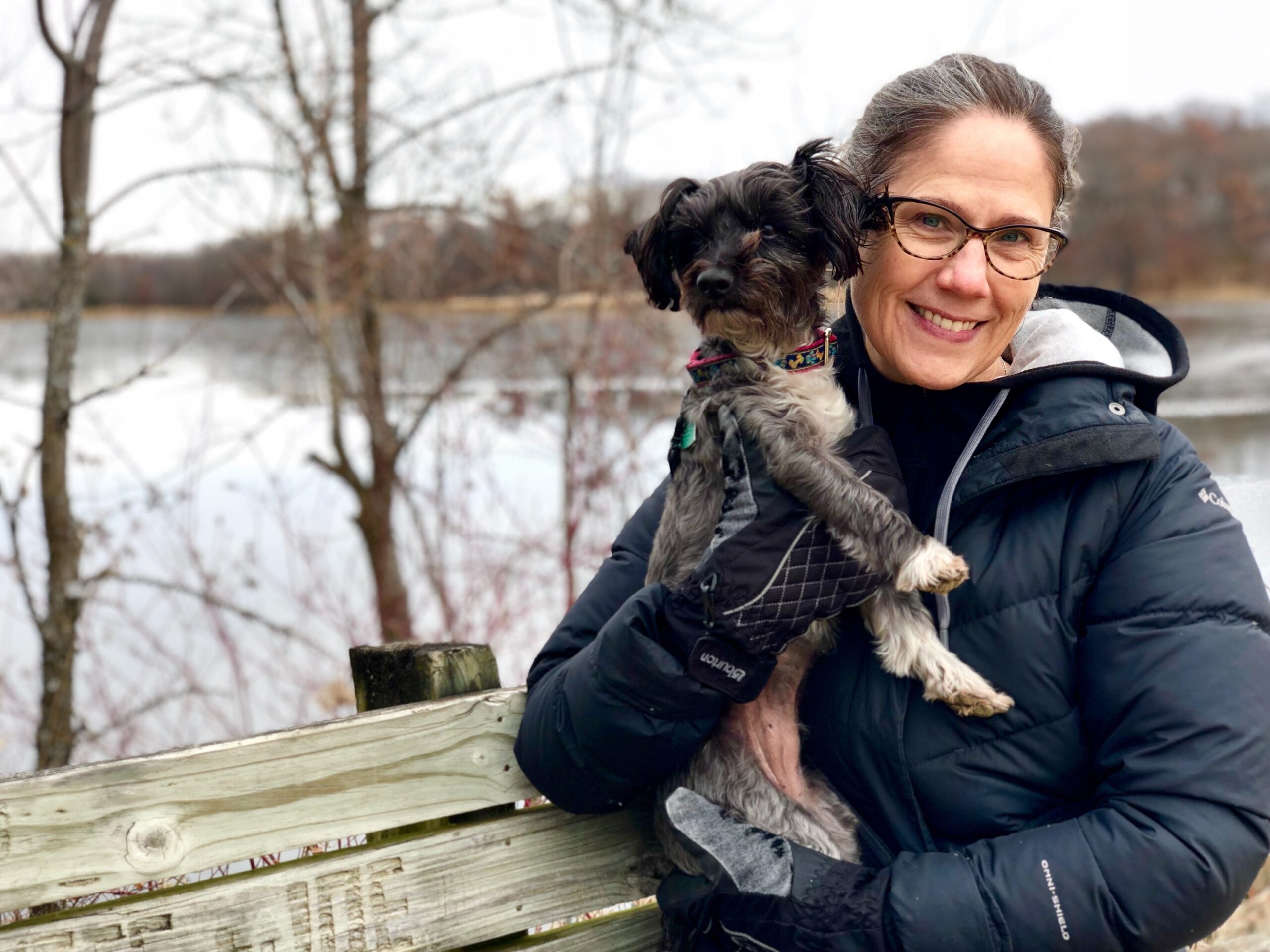
When I met Sarah Anderson at a local Caribou Coffee, I wanted to hear what had prompted a longtime Plymouth resident to run for office for the first time. After attending City Council meetings and asking questions about the changes she saw around her, Sarah decided she could contribute. Rather than complain from the sidelines, she chose to step forward for public service and seek the Ward 2 seat on the Plymouth City Council. Her story traces that decision back to her family, her connection to the outdoors, and the values that shaped her concern for her community. Here, Sarah shares her story in her own words.
By Sarah Anderson
Rooted in Nature
When my parents married in 1960, they planned a canoe trip for their honeymoon—the kind where you are flown into the wilderness and dropped off. Mom grew up on a working farm, and Dad came from a small town in southern Minnesota. They loved nature and passed that love on to their children. Our family vacations were carefully planned tent-camping trips. Loving the land and spending time outdoors were simply part of life.
That connection took particularly deep root in my heart. Between ninth and tenth grade, I spent a summer serving with the Youth Conservation Corps in northern Minnesota. We did hands-on work for the Forest Service that included wildlife clearings and work on sections of what is now the Superior Hiking Trail. We lived in tents for a week or two at a time, returning on weekends to our base camp at the Environmental Learning Center in Isabella, Minnesota, now known as Wolf Ridge.
My happy place has always been outdoors, away from paved trails and immersed in nature. Caring for the environment matters deeply to me, as does preserving it for future generations. As a citizen, mother, and grandmother, I care about the natural world, my city, state, and country. Minnesota has a strong history of balancing the tension between protecting natural resources and recognizing the importance of homes, jobs, and a healthy business community.
These values are part of why I am running for Plymouth City Council in Ward 2. Plymouth has been my home since the early 1970s. I have watched it grow from farmland into a city recognized for its quality of life. I have been saddened by the loss of farm land and trees, and yet, what Plymouth is today is due to navigating the previously mentioned tension through leadership focused on residents, fiscal responsibility, and protecting our natural resources.
Questions About Growth in Plymouth
Beginning in the fall of 2024, I started seeing changes around the city. Roundabout construction caught my eye first. In 2025, I noticed multi story apartment construction near the northwest corner of Highway 55 and Interstate 494, and attended a city meeting about proposed re-development near the southeast corner that included additional multi-story apartments and expanded bus transit service. What I was hearing did not seem to reflect the historical character of Plymouth. I wanted to understand what else was being proposed and what was guiding the re-development planning.
My sister and I began attending meetings at City Hall. As we listened, my mind went back to the GreenStep Cities display I had seen there in 2024. I wondered if there was a correlation between the program and the shift in Plymouth’s planning and development.
Researching Sustainability Policies
As I researched the program and its affiliated networks, I learned that Plymouth’s City Council voted against joining Minnesota GreenStep Cities in 2020 due to significant community resistance. The city later joined in August 2023. GreenStep Cities is a voluntary program that helps communities pursue the program’s sustainability and quality-of-life goals. It offers optional actions, with local elected officials retaining control over participation and implementation. The program publicly rewards cities as they take the next step toward the program’s goals.
Even with that voluntary structure, public recognition programs coupled with access to revenue from outside organizations can create pressure to adopt policies that residents have not fully considered and that can place financial strain on the primary responsibilities of the city. I want my fellow citizens to understand their influence on planning, spending, the decisions affecting their neighborhoods, and the use of their tax dollars.
My research into affiliate organizations started with the Green Step Cities which is affiliated with the Sustainable States Network (SSN) which is affiliated with the International Council for Local Environmental Initiatives (ICLEI). ICLEI was established in 1990 by the UN to promote the UN’s vison for global transformation of social and economic life at the local level through the adoption of their environmental initiatives—city by city around the world. These connections raised questions for me about the impact of international policy priorities on Plymouth’s pre-existing needs, optimal use of tax payer funds, and the protection of civil liberties and property rights.
Lessons From Rosa Koire
Shortly after learning about these connections, I read Rosa Koire’s Behind the Green Mask: U.N. Agenda 21, published in 2011. Koire described herself as a lesbian and a liberal Democrat. She was a forensic real estate appraiser whose work in California specialized in eminent domain. After observing a wave of redevelopment in the early 2000s, she became involved in a dispute over redevelopment in her community. Her book chronicles that experience and the conclusions she drew about the policies behind it.
Koire argued that “UN Agenda 21” and “its philosophy of Communitarianism” had gained influence within her own party and was threatening civil liberties and private property rights. Her assessment troubled her deeply and led to extensive speaking engagements across the United States and abroad to anyone who would listen. She urged people to examine the policies and defend their rights. Her story reminded me that, in America, protecting civil liberties and private property rights is a non-partisan issue grounded in our founding documents.
Local Planning and Public Trust
My research also led me to Minnesota Statute 216H.02, which established a statewide goal of reaching net-zero greenhouse gas emissions by 2050. Residents deserve to understand what state law requires, what remains optional, and what state law and local proposals such as the GreenStep Cities could mean for taxpayers, property owners, and businesses now and in the future—as in 2050 and beyond.
My concern is the lasting influence of policies once they become part of city plans, codes, and ordinances. I oppose Plymouth’s participation in programs such as GreenStep Cities because of the conflict of interest it creates– even when participation is voluntary and can be withdrawn. I do not believe residents have given meaningful consent to the broader policy direction these frameworks represent. To me, allowing international sustainability priorities to guide local development without sufficient public understanding and support undermines public trust. City planning should reflect residents’ best interests, open discussion of the climate assumptions, costs, and tradeoffs behind each proposal—and a willingness to reconsider decisions, policies, codes, and ordinances when residents raise concern.
Why I Am Running
The priorities I outline on my campaign website are fiscal responsibility, protecting constitutional rights, and keeping local leaders accountable to the tax paying citizens. These priorities begin with an informed and involved citizenry: residents who attend meetings, ask questions, and take an active role in their community. The City Council needs autonomy to navigate the decisions before them as they consider the concerns of the residents, the needs of the city, and the fiscal constraints unencumbered by obligations to outside programs or organizations.
Americans care about their rights and freedoms, whatever their political affiliation. Yet, too often, debates over environmental policy, big business, and big government divide and distract us. I have a growing concerned that while we focus on these debates, local policies affecting our civil liberties and property rights are taking hold in cities across Minnesota and beyond without enough public scrutiny or consideration of long-term impact on our civil liberties and property rights.
That is why I decided to run: to contribute to the city I have called home for more than five decades and to help ensure its future honors the people who live here. We are blessed to live in a constitutional republic with the Declaration of Independence, the Constitution, and the Bill of Rights as the foundation for our freedom. Let’s use these principles to defend our rights, strengthen our cities, our state, and our nation through government of the people, by the people, and for the people. I have hope for America, and I hope you do, too.
Learn more and contact Sarah
Website: www.sarah4plymouth.com
Email: sarah4plymouthmn@gmail.com
Phone: 612-439-2060